Security Structured Around Clinical Environment Demands
Hospital and Healthcare Campus Security in Duncanville for medical facilities requiring de-escalation-trained officers and HIPAA-compliant access control across patient-facing and high-risk areas.
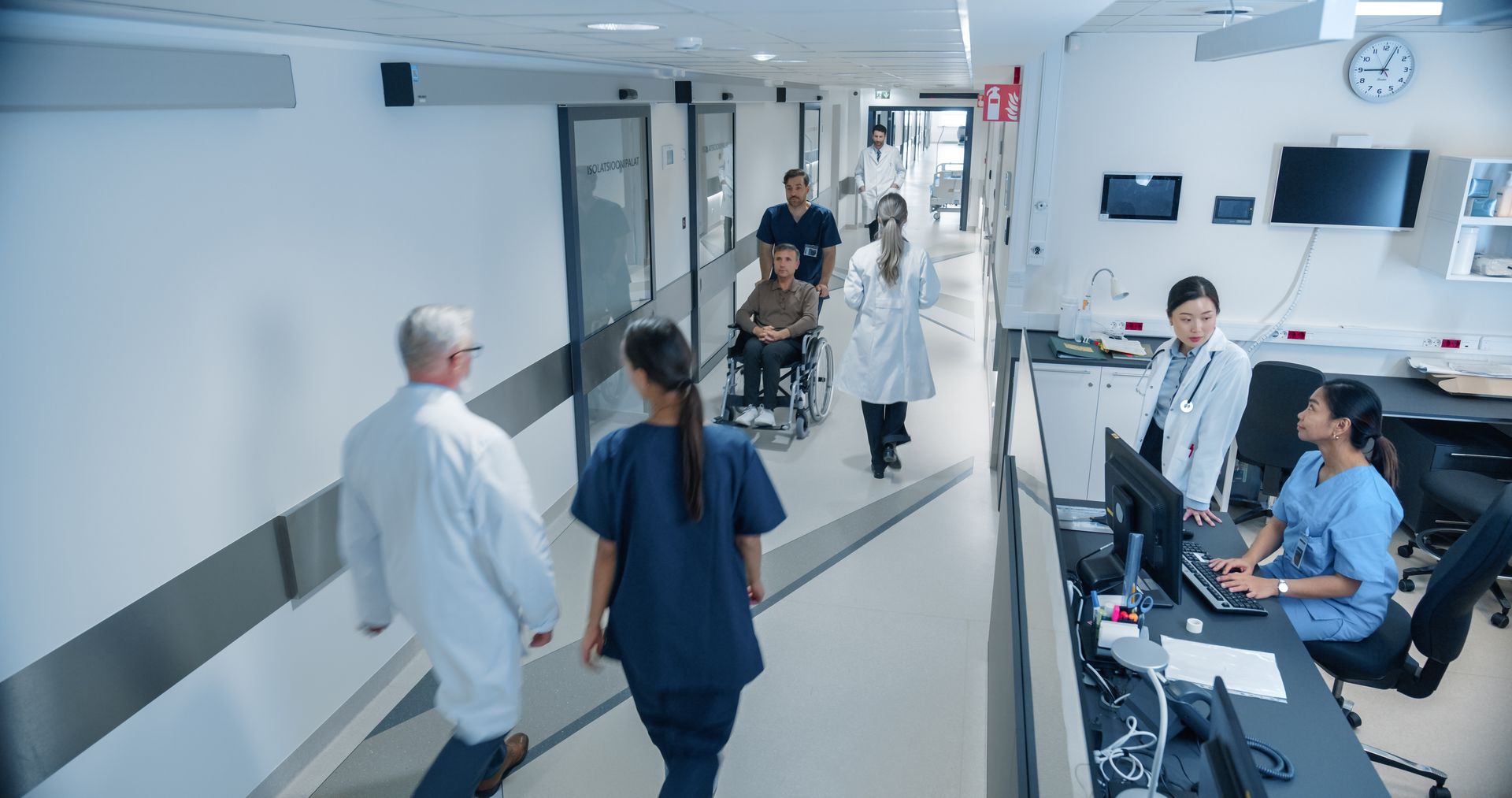
Healthcare facility security operates under a set of requirements that standard commercial guard programs are not designed to meet. Patient privacy regulations, visitor access protocols, emergency department volatility, and the need to maintain a non-threatening environment for patients and families all create conditions that demand specifically trained personnel. Alltexas Security LLC provides dedicated healthcare security programs for hospitals, medical campuses, and clinical facilities across the DFW region, deploying officers trained in de-escalation techniques suited specifically to clinical settings where confrontational responses can compound already difficult situations.
HIPAA compliance in a security context means more than protecting paper records—it governs how officers handle visitor access requests, what information can be shared with family members attempting to locate a patient, and how access to sensitive treatment areas is documented and controlled. Officers stationed at high-risk areas such as emergency departments and psychiatric intake zones are trained to distinguish between a patient in distress, a visitor in emotional crisis, and an active threat, and to respond appropriately to each without escalating the situation unnecessarily. Parking garage and campus perimeter patrols extend this coverage to areas where patients and staff are frequently most vulnerable.
Request a comprehensive free on-site security assessment designed specifically for medical facilities to identify access control gaps and high-risk stationing requirements..
What Healthcare Security Actually Accomplishes
De-escalation training in a clinical context involves specific verbal and non-verbal communication techniques that differ from standard security protocols. Officers learn to read clinical body language, recognize signs of psychiatric distress versus combative intent, and apply graduated response procedures that prioritize verbal resolution before any physical intervention is considered. This approach protects patients, staff, and the facility from the liability and operational disruption that follows unnecessary use-of-force incidents in a healthcare setting.
Once a structured healthcare security program is in place, facilities typically observe more consistent enforcement of visitor access policies, faster identification and isolation of disturbances before they escalate into the general patient population, and documented compliance with the access control standards that hospital accreditation bodies and insurers review. Staff in high-pressure departments like emergency medicine report measurably different working conditions when officers stationed nearby are trained to intervene appropriately rather than reactively.
Coverage scope across a medical campus involves several distinct zones with different risk profiles: the emergency department entrance, inpatient floor access points, pharmacy and controlled substance storage areas, administrative offices, and the parking and perimeter zones where off-hours incidents are concentrated. Alltexas Security LLC structures stationing and patrol assignments based on the specific layout and operational hours of each facility rather than applying a uniform template across different campus configurations..
Answers to Frequent Healthcare Security Questions
Hospital administrators and facilities directors evaluating security programs for clinical environments often need clarity on how officers are trained, how HIPAA requirements shape daily operations, and how coverage is structured across different campus zones.
How does de-escalation training differ for clinical settings versus standard security work?
Clinical de-escalation training specifically addresses patient populations in distress, psychiatric presentations, and emotionally volatile family members—situations that require fundamentally different communication approaches than commercial property incidents.
What does HIPAA compliance require from security personnel on a daily basis?
Officers must follow strict protocols for handling visitor access requests, avoid sharing patient location information without proper authorization, and document access control events in ways that align with the facility's privacy policies.
Why are emergency departments treated as a distinct stationing priority?
Emergency departments combine high patient volume, extended wait times, pain and stress among patients and families, and frequent after-hours activity—a combination that produces a disproportionate share of healthcare facility security incidents.
When should campus perimeter and parking patrols be active in Duncanville medical facilities?
After-hours periods—late evenings and overnight shifts—represent the highest risk window for vehicle-related incidents and unauthorized campus access, making continuous perimeter patrol most critical outside of standard business hours.
What does the free on-site medical facility assessment cover?
The assessment maps access control points, identifies HIPAA-sensitive zones, reviews current visitor management procedures, and evaluates which areas present the highest stationing priority based on patient traffic and incident history.
Alltexas Security LLC approaches each healthcare security engagement as a facility-specific program rather than a standardized deployment. Connect with our team to arrange your medical campus assessment and review how stationing and patrol structures can be aligned to your facility's patient care priorities and compliance requirements.